Pawsitive Beginnings: Rescuing foxes from the fur trade
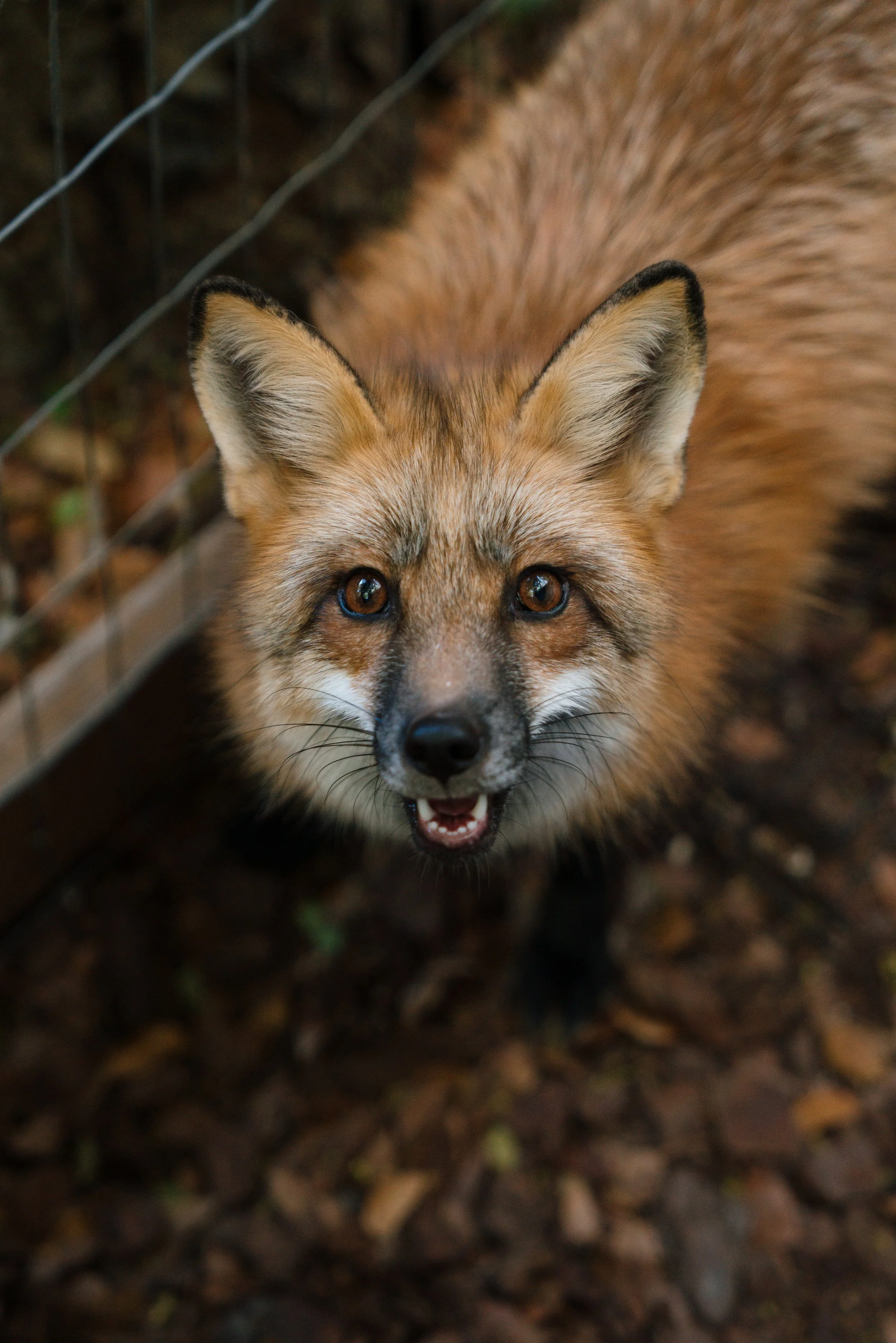
Six little fluff balls live in a backyard enclosure. Their names are Penny, Reef, Coral, Isla, Kai, and Ridley, and they are happy and healthy foxes. However, their lives didn’t start out that way. All six were born on farms as part of the fox fur trade in the U.S. Wait, the fur trade? Didn’t that die out in the early 1900s as the U.S. became more industrialized? Nope.
Through the perseverance of an animal rescuer and a little bit of luck, these six foxes were rescued from oppressive fur farms in the Upper Midwest and entrusted to the care of a Florida woman who runs a unique animal rescue. These critters are now vibing and thriving while living the island life in the Florida Keys.
***
According to animal welfare organizations trying to end this practice, there are over 50 fox fur farms in the U.S. This number is a guess, however, because the U.S. Department of Agriculture (USDA), which oversees all U.S. animal operations, doesn’t track fox farms. (They do, however, track mink farms of which there are over 110 farms as of 2022, producing over 2 million pelts valued at over 39 million dollars annually, if anyone was wondering.)
Fur trade foxes occupy a grey area of farm animals and considered livestock. The foxes found on farms today had wild ancestors over two hundred years ago when fur trapping was a significant source of income for American and Canadian settlers from Europe. Back then trappers captured a variety of animals including beaver, otter, fox, raccoon, and mink. In fact, beaver and otter trapping almost drove those animal species to extinction. At some point during the late 1800s or early 1900s, foxes and minks were captured alive and moved onto farms. They were then bred and crossbred (and probably inbred) to produce fur of different colors, textures, and lengths for the hats, coats, and scarves of the fashionable and wealthy around the world. As people became more aware of the cruelty of this practice, the fur industry declined, but didn’t disappear.
Which presents us with a dilemma: Over a century removed from their wild cousins, today’s fur trade foxes are tame, but not domesticated. If fox farming ended tomorrow, thousands (perhaps tens of thousands) of foxes would be “free,” but that would create a new problem. Having been raised on farms, these foxes can’t survive on their own in the wild so they can’t be turned loose. While tame, they aren’t suitable as house pets either. They still possess enough of their wild nature that they can bite, scratch, dig, and possibly hurt people, other animals, and destroy the things around them. Many of them also experienced injuries or illnesses while on farms requiring special medical care.
While this is a problem with no easy answers, Nicole Navarro has taken it upon herself to do what she can for them. She is the founder and sole operator of Pawsitive Beginnings Fox Rescue in Florida. Like most people who end up in animal rescue, it’s a role that she didn’t seek out, but instead found her.
***
“Going way back, I grew up on a horse farm in western Pennsylvania, so animals have always been a part of my life,” she said on a video call from the office where she works her day job. She said her neighbor during that time was a wildlife rehabilitator for Allegany County. “From a very young age, I was acutely aware of the difference between wild and domestic (animals).”
In the early aughts, she followed her mother to the Florida Keys where she opened a SCUBA diving business. By 2017 Navarro was living in Key West and working at Hemingway House and Museum, a place famous for its resident six-toed cats (see previous What’s Pawsitive). Then Hurricane Irma hit.
“I was one of 10 employees that stayed at the Hemingway Home with the cats,” she said. It was rough, she adds. She said there was also another animal organization with one person who stayed behind, the Monroe County Sheriff’s Office’s (MCSO) Animal Farm.
The MCSO’s Animal Farm began in 1994 as an animal rescue facility. It was put on county jail property because they happen to have space. The farm’s original caretaker began allowing inmates who qualified to help out on the farm and taught them animal husbandry skills. Although called a farm, the organization takes in animals mostly rescued by law enforcement, both domestic and exotic, as well as surrendered exotic pets. The farm cares for every kind of creature from chickens and skunks to large animals like zebus, kinkajous, and boa constrictors. The public are allowed to visit this facility to see and learn about the many animals in their care.
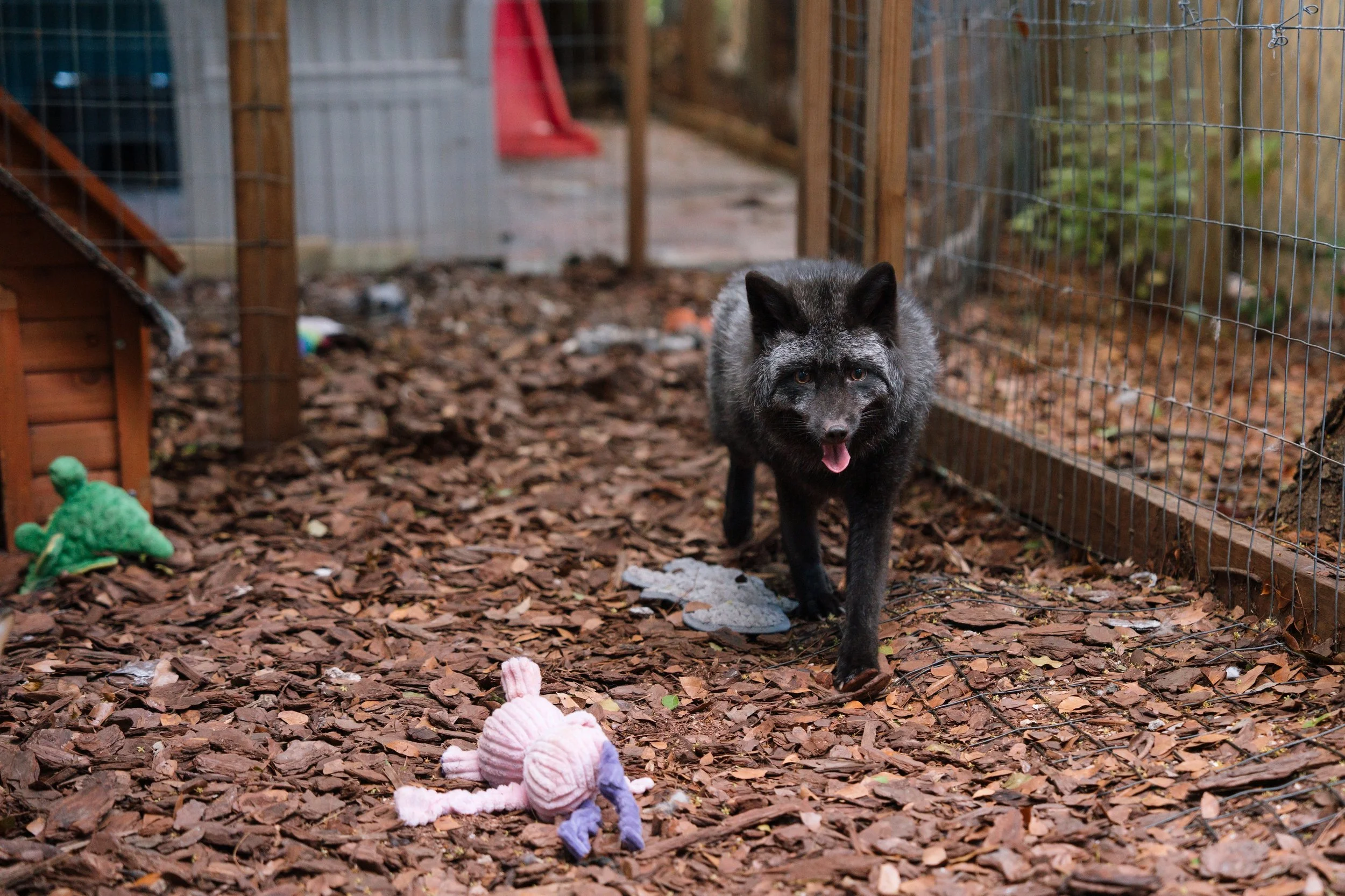
A fox at home in an enclosure. Photo provided by Pawsitive Beginnings.
Navarro says that after the hurricane, she reached out to the farm’s caretaker, Jeanne Selander, and asked if she needed any help. Selander happily accepted. She was the only detention center personnel who stayed behind after all the inmates and other staff had been evacuated. Navarro says the during her time helping the center the two of them became friends. However, the hurricane had scared her away from Key West back to where her mother lives.
“Being way down in Key West during a hurricane was a little terrifying,” she admitted.
Navarro continued driving to Key West to volunteer at the animal farm. In 2018, two foxes were surrendered to the farm.
“The was the first time I had been up close and personal with foxes,” she explained. “In the wild they’re elusive and very aloof. Here was an opportunity to observe these animals and I became fascinated with them and their stories.
“About every captive bred fox in the United States has fur farming origins,” she continued. “You can’t go out and capture wild animals and make them your pet. So, the fur industry sort of led into the exotic pet industry for foxes.” Of the foxes she worked with at the farm, one was a fur farm rescue, and the other was surrendered after being a private pet. Navarro says that she began researching the fur trade to learn about foxes. Then she started networking with other people who rescued farmed foxes eventually making a connection with a woman in Minnesota.
“I found a woman that could legally negotiate the release of foxes from fur farms that were deemed undesirable by the farmer,” she said. “In 2020, right at the start of COVID, she reached out to me and asked if I was ready to start helping. I said, ‘Yes’!”
She received her first four foxes and formed her nonprofit, Pawsitive Beginnings, later that year.
“That is the cliff notes version of the story,” she laughed.
***
Sadly, all but one of those original four grew old and passed away. Today she has six. Her newer foxes came as babies because she didn’t think the adults would be accepting of another adult fox.
“Foxes are not pack animals so the fact that all six of mine get along is amazing,” she notes adding that the most she is able to care for at one time is eight. “So, adding more is tricky. I’ll never disrupt their comfort or their dynamic. At this point I’d only be able to introduce a baby, like an infant, because they’re not seen as a threat. Adults are too stubborn.”
She has a daily routine for caring for the foxes. She checks on them first thing in the morning to make sure everyone is OK. Then she goes to work and the foxes sleep all day. When she returns home, she spot cleans the enclosures and does a deep clean once a week. They eat only once a day at dinner time.
“I have it down to a science,” she described. Her charges each natural food that are appropriate for foxes, who are omnivores. “I offer fruit and vegetables. They don’t eat it,” she laughed. Chicken she gets from the grocery store, but more fox-specific meats like rabbit and duck she purchases from a specialty raw meat store in Miami. Pork and beef are not on the foxes’ menu. From her tax returns, she knows she spent $24,000 on food in 2025.
“I could feed them kibble; I see other people doing it,” she reasoned. “I don’t do it. I never cut corners to save dollars.”
Some of her foxes also have chronic medical issues that require attention. A specialized wildlife vet comes to her house to treat them. One condition she sees in fur trade foxes is arthritis for which they receive red-light laser therapy. While there’s no way to know for sure, she believes inbreeding is what causes most of these chronic medical conditions.
Besides food, she also has both a state Fish and Wildlife and a USDA license for her small facility. She also carries liability insurance because she believes it’s the right thing to do. She notes that Florida sanctuaries are not required by law to carry insurance, even when they are open to the public. Navarro carries it even though her facility is not open to the public nor does she have volunteers.
“I have people come over. We have partner agencies that bring their clients over so I’m fully licensed and insured,” she said. Her mother often helps out and if she needs to travel or take a vacation, Navarro has trusted person who can care for them while she’s gone. She has no desire to grow the rescue larger or to have staff or volunteers. She says the most important thing about her rescue is that she keeps it as strictly a one-woman operation.
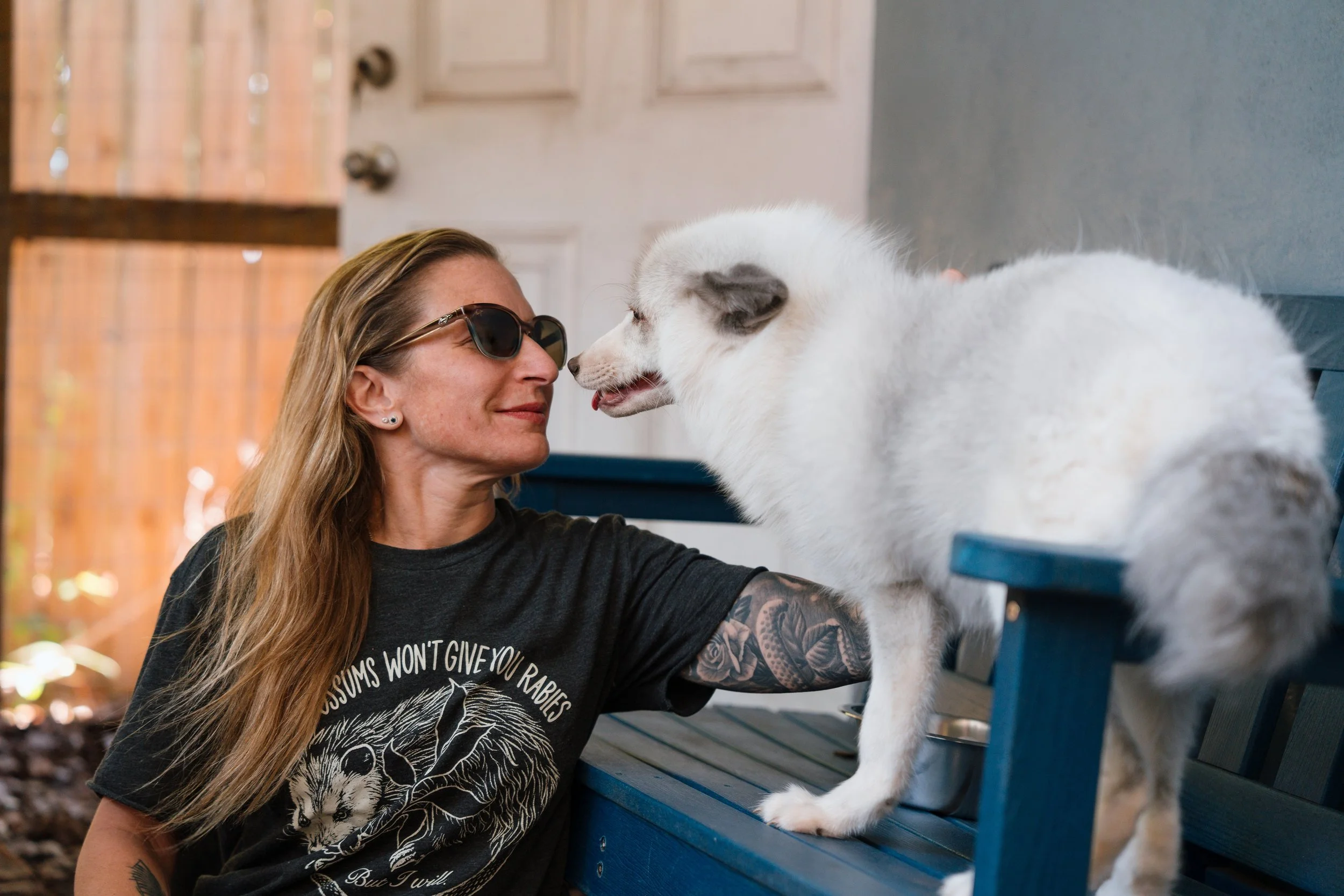
Navarro with one of her rescued foxes. She only takes in a few because she wants to keep the rescue manageable. Photo provided by Pawsitive Beginnings.
“When I started this, I promised myself I would never take on more than I could handle and never take on more than I could handle by myself.” She has seen and read about other rescues that took in too many animals and operators got in over their head. “They can’t say ‘no.’ They take in too many and animals suffer. Funds are low; food is low. It breaks my heart when I see rescues of any kind saying [they’re] out of food or out of money… If the internet went dark tomorrow and no more donations were coming in, I could still handle it.”
Having said that, however, she is grateful to people who do donate to her nonprofit, which helps her cover the costs of food and medical care. When asked what her greatest need is, she said general operating support.
“I know it’s far more exciting when you’re constantly getting a new rescue,” she continued. “I’m in a really good place where just general operating support is all I need. But it is an expense. Serving an all-meat diet is expensive.”
***
While her facility isn’t open to the public, she does offer a special community program called “animal-assisted healing” for local individuals, therapists, schools, community groups, and other non-profits. On arranged visits, a person or group is allowed to observe the foxes and learn their stories of survival and how they found their way to her shelter. The idea is to encourage participants to use the foxes’ stories to explore their own issues with trust, resilience, and emotional recovery. Participants are allowed to interact with the foxes, but the area is set up so that the foxes come to them if they want to. If the foxes don’t, they can stay in their own space.
This program has earned Navarro regional and national honors. Last August, Monroe County declared a special day as Pawsitive Beginnings Day, and she has been interviewed on podcasts and local news. This is how What’s Pawsitive found Navarro. Normally What’s Pawsitive wouldn’t profile an organization that isn’t open to the public, but learning that the fox fur trade is still happening today and learning about the horrible conditions these animals live under, Navarro’s fox story needed to be told.
“The fur trade is horrific,” Navarro explained. “People think they shave them. No, they kill them. Another big misconception is, if they’re saved as a baby, why can’t they be released to the wild? Well, again, no one in their direct lineage has ever been wild so they never learned how to survive in the wild. It would be immoral and illegal to release them.”
“A lot of people aren’t aware that (the fur trade) is still happening in the U.S.”